Curriculum Content
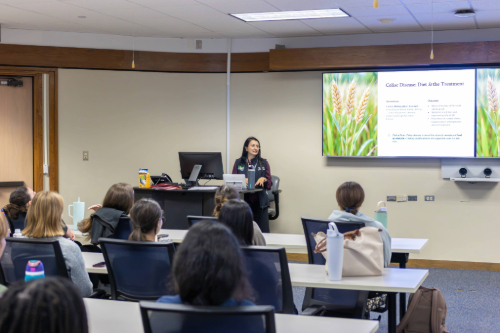 Through an interdisciplinary lens, students will explore the role of dietary patterns, behavior change techniques, and patient-centered counseling in addressing conditions such as obesity, cardiometabolic, and GI disease. Emphasis will be placed on practical applications, including motivational interviewing and culturally responsive care to weight management.
Using state-of-the-art simulation manikins and simulation tools, students have an opportunity to learn and practice nutrition-focused physical exam and counseling skills alongside dietetic professionals.
Nutrition curriculum across the medical training continuum
Preparing future physicians with nutrition knowledge, culinary medicine skills, and lifestyle medicine competencies—from the first year of medical school through residency and lifelong clinical practice.
Year One · Foundations
MS1 · Building the foundation
First-year students are introduced to evidence-based nutrition science, culinary medicine fundamentals, and the social determinants of dietary health—woven through the Doctoring and Foundations of Medicine threads.
Fall Semester
- Doctoring 1: Long Theme – Introduction to Nutrition
- Introduction to evidence-based nutrition science and nutrition counseling principles
- Foundations of preventive medicine and lifestyle-based chronic disease prevention
- Live-streamed lectures combined with Stanford online independent learning modules
- Doctoring 1: iCARE – Virtual Culinary Medicine (Fall block)
- Early exposure to culinary medicine concepts and food-as-medicine principles
- Application of healthy meal planning and patient-centered nutrition counseling
- Introduction to practical nutrition strategies for chronic disease prevention
- Doctoring 1: Population Health – Social Determinants of Health
- Examination of food insecurity, health disparities, and access to nutritious foods
- Understanding how socioeconomic and environmental factors influence dietary behaviors and health outcomes
- Foundations of Medicine: Nutrient Metabolism
- Core principles of macronutrient and micronutrient metabolism
- Integration of nutrition biochemistry into foundational medical sciences
- Foundations of Medicine: Diabetes Mellitus
- Nutrition and lifestyle approaches to diabetes prevention and management
- Team-based learning focused on glucose regulation and chronic disease
- Foundations of Medicine: Diabetes – Biochemical Pathways and Multisystem Regulation
- Role of nutrition in metabolic regulation and endocrine physiology
- Integration of dietary patterns into disease mechanisms
- Foundations of Medicine: Drug Elimination and Metabolism
- Nutrition-related considerations in medication metabolism and pharmacokinetics
- OASA: Personal Nutrition 1
- Physician wellness and personal nutrition awareness
- Encouraging self-reflection on dietary habits and lifestyle behaviors
Spring Semester
- Doctoring 2: Unintended Weight Loss/Cachexia
- Nutrition considerations in chronic disease, malignancy, and malnutrition
- Recognition of nutritional deficiencies and supportive care strategies
- Doctoring 2: Heart Healthy Diet
- Evidence-based dietary approaches for cardiovascular disease prevention
- Introduction to Mediterranean and DASH dietary principles
- Doctoring 2: Renal Nutrition
- Nutrition management principles in kidney disease and hypertension
- Introduction to sodium, phosphate, calcium, and fluid management concepts
- Doctoring 2 · iCARE – Virtual Culinary Medicine
- Continued application of culinary medicine principles
- Reinforcement of nutrition communication and healthy cooking strategies
- Cardiovascular: PBL Case #2
- Nutrition and lifestyle interventions in cardiovascular disease management
- Renal: PBL Case #3
- Integration of renal nutrition principles into clinical problem-solving
Year Two · Integration
MS2 · Integrating systems and lifestyle
The second year deepens clinical nutrition knowledge across GI, endocrine, and reproductive health—and adds the school’s signature hands-on culinary medicine experience during the transition to clerkships.
Fall Semester
- Doctoring 3 · Long Theme – Nutrition and Lifestyle Management
- Nutrition management of gastrointestinal disease, liver disease, pancreatic disorders, gallbladder disease, and malabsorption syndromes
- Integration of lifestyle medicine into chronic disease prevention and management
- Doctoring 3 · Diabetes Focus – Virtual Culinary Medicine
- Culinary medicine applications for diabetes prevention and treatment
- Meal planning and practical counseling strategies for glycemic management
- Doctoring 3 · Population Health – Obesity
- Obesity as a chronic disease and major public health challenge
- Nutrition, physical activity, and behavioral interventions for weight management
- Doctoring 3 · Population Health – Alternative Medicine
- Review of integrative and complementary nutrition-related therapies
- Discussion of evidence-based lifestyle interventions
- ENDO · Evidence-based Medicine Theme – Obesity
- Intensive lifestyle intervention approaches for obesity management
- Evidence supporting 5–10% body weight reduction for metabolic improvement
- ENDO – PBL Case #2
- Nutrition-centered management of endocrine and metabolic disease
- GI – Intestinal Microbiome in Health and Disease
- Role of the microbiome in gastrointestinal and systemic health
- Relationship between diet, inflammation, and chronic disease
- OASA – Personal Nutrition 2
- Advanced physician wellness and nutrition self-awareness
- Reflection on sustainable lifestyle practices
Spring Semester
- Doctoring 3 · Long Theme – Preconception and Prenatal Nutrition
- Nutrition during preconception, pregnancy, and maternal-child health
- Early-life nutrition and developmental health principles
- Transition to Clerkship · Required – Hands-On Culinary Medicine
- Experiential culinary medicine curriculum focused on cardiometabolic and gastrointestinal health
- Hands-on cooking instruction and practical nutrition application
- Patient counseling strategies related to obesity, diabetes, MASLD, hypertension, and GI disease
- Application of culturally responsive and patient-centered nutrition communication
Clinical Years
MS3/MS4 · Clerkships and clinical training
During the third year, students apply nutrition and lifestyle medicine principles directly to patient care across multiple specialties. Instruction emphasizes evidence-based nutrition as a first-line intervention for diabetes, obesity, and cardiometabolic disease—including reduced-calorie dietary patterns, physical activity, behavioral support, and intensive lifestyle interventions for clinically appropriate weight reduction.
View content
- Surgery / MS4 Critical Care – Food Insecurity + Critical Care Nutrition (Parts 1 and 2)
- Nutrition support in critically ill patients
- Recognition of food insecurity and malnutrition in hospitalized populations
- Pediatrics Clerkship – Outpatient Pediatric Nutrition (lecture)
- Nutrition across infancy, childhood, and adolescence
- Counseling on feeding practices, growth, obesity prevention, and healthy family behaviors
- Family Medicine Clerkship – Outpatient Obesity Management
- Lifestyle counseling and obesity management in outpatient practice
- Behavioral change counseling and preventive care strategies
- Geriatrics Clerkship – Feeding Issues at the End of Life
- Nutrition and feeding considerations in aging populations
- Ethical and clinical discussions surrounding nutrition support
- OB/GYN Clerkship – Hypertension and Diabetes in Pregnancy · Preconception · Lactation
- Nutrition management during pregnancy and postpartum care
- Gestational diabetes, hypertension, breastfeeding, and maternal nutrition counseling
- Internal Medicine – Multispecialty Clinical Integration
- Nutrition as first-line therapy in diabetes and metabolic disease management
- Mediterranean dietary patterns and evidence-based nutrition interventions
- Nutrition and lifestyle approaches in MASLD, obesity, metabolic syndrome, and chronic kidney disease
- Calcium, phosphate, PTH, FGF23, and vitamin D metabolism in kidney and endocrine disease
- Cancer prevention through nutrition, physical activity, and obesity reduction strategies
Senior Year
MS4 Electives and Transition to Residency
Senior electives let students pursue advanced lifestyle medicine, motivational interviewing, and culinary skills—building the toolkit they will bring into residency and clinical practice.
View content
- Elective – Lifestyle Medicine
- Evidence-based lifestyle interventions for chronic disease prevention and management
- Integration of nutrition, physical activity, sleep, stress management, and behavior change
- Elective – Integrative Medicine and Healthy Living
- Holistic and patient-centered approaches to wellness
- Mind-body medicine and nutrition integration
- Elective – Advanced Culinary Medicine
- Nutrition-focused physical examination skills
- Motivational interviewing and advanced counseling strategies
- Culinary skills and practical nutrition applications in patient care
- Weight management and chronic disease prevention
- Elective – Transition to Residency · Culinary Medicine
- Obesity medicine and weight management counseling
- Advanced motivational interviewing techniques
- Behavior change counseling and patient engagement strategies
- Preparing future residents to integrate lifestyle medicine into clinical practice
- Advanced Patient Care – Neonatal Intensive Care Unit
- Specialized neonatal and infant nutrition concepts
- Nutrition management in medically complex pediatric populations
Graduate Medical Education
Residency · Internal Medicine and Pediatrics
Residents continue building applied nutrition skills through interprofessional culinary medicine training and ambulatory clinic experiences—alongside registered dietitians and public health partners.
View content
- Residency – Internal Medicine
- Specialty ambulatory clinic opportunities focused on interprofessional collaboration
- Culinary medicine education alongside registered dietitians
- Diabetes and cardiometabolic disease counseling in clinical practice
- Lifestyle-based approaches to obesity, hypertension, and chronic disease prevention
- Residency – Pediatrics
- Hands-on 3-part culinary medicine curriculum alongside dietitians
- Training focused on infant, child, and adolescent nutrition
- Counseling on picky eating, food insecurity, sports nutrition, and chronic disease prevention
- Integration of culinary medicine, public health, and patient communication skills
Practicing Physicians
Continuing Medical Education and Lifelong Learning
Future plans extend nutrition and culinary medicine education beyond training—offering hands-on CME programming for practicing physicians and healthcare professionals, aligned with emerging national nutrition competencies.
View content
- Future Plans – Culinary Medicine CME Programming
- Hands-on culinary medicine training for practicing physicians and healthcare professionals
- Training in practical nutrition counseling and food-based interventions
- Interprofessional collaboration with dietitians, public health professionals, and culinary medicine educators
- Alignment with emerging national nutrition competency initiatives and evolving USMLE nutrition integration
The Through-line
Core principles across every stage of learning
View content
- Evidence-Based Nutrition Science
- Culinary Medicine and Practical Food Skills
- Patient-Centered and Culturally Responsive Care
- Interprofessional Collaboration
- Population Health and Health Equity
- Prevention and Lifestyle-Based Chronic Disease Management
- Food Insecurity and Social Determinants of Health
- Translational Clinical Practice and Lifelong Learning
- Physician Wellness and Personal Nutrition Awareness