Ultrasound
Shaping the Future of Emergency Ultrasound
Bedside imaging driving real-time clinical decisions
Point-of-care ultrasound (POCUS) is a core component of clinical care, education, and innovation within the Department of Emergency Medicine at UTHealth Houston. Our ultrasound program supports the integration of bedside imaging into everyday emergency practice, enhancing diagnostic accuracy, procedural safety, and real-time clinical decision-making across a wide range of patient presentations.
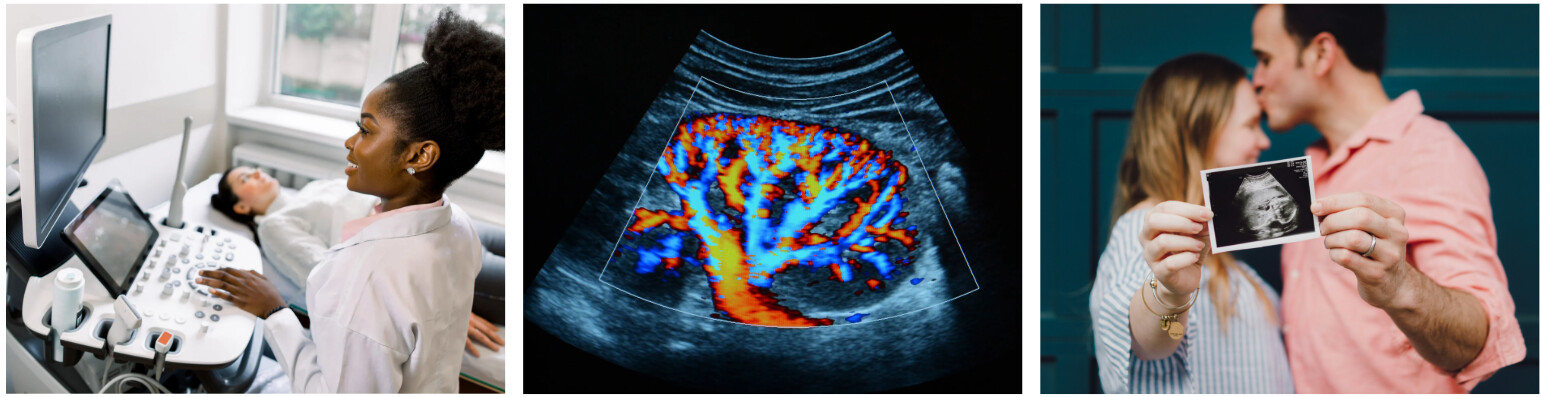
The department maintains a robust ultrasound curriculum that spans medical student education, resident training, and faculty development. Learners gain hands-on experience using ultrasound in trauma, resuscitation, procedural guidance, and critical care, with instruction grounded in evidence-based practice and real-world application. Ultrasound education is reinforced through longitudinal training, simulation, bedside teaching, and formal didactic sessions.
In addition to its educational mission, the ultrasound program supports clinical operations and scholarly activity within the department. Faculty actively contribute to curriculum development, quality assurance, and research initiatives that advance the role of ultrasound in emergency medicine. Together, these efforts ensure that ultrasound remains an essential and evolving tool in patient care at UTHealth Houston.
Situated within the world’s largest medical center, our program integrates cutting-edge technology, expert faculty, and a commitment to innovation to provide exceptional training and patient care.
Comprehensive Education and Training
Ultrasonography is a cornerstone of our clinical care, educational activities, and research initiatives.
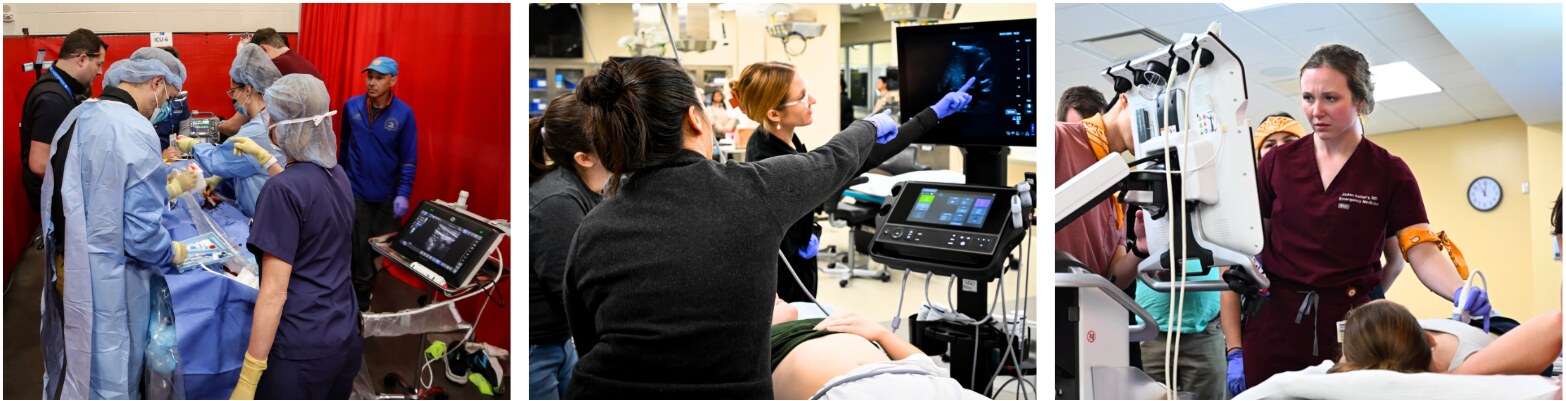
Highlights:
- Longitudinal ultrasound curriculum for residents, including monthly didactics, dedicated intern rotation, and senior elective
- Ultrasound training for medical students, nursing staff, fellows, and faculty
- State-of-the-art technology:
- 5 GE Venue units at Memorial Hermann-TMC
- 8 Sonosite Edge units at Memorial Hermann-TMC
- 3 Sonosite X-Porte units at Lyndon B. Johnson Hospital
- 3 Sonosite Edge II units at LBJ Hospital
- Weekly quality assurance reviews of archived images to maintain the highest standards
Faculty Excellence and Leadership
The ultrasound program is led by faculty with extensive expertise in point-of-care ultrasound education, clinical application, and program development. Our faculty bring diverse experience from academic medicine, emergency care, simulation, and global health, contributing to a comprehensive and well-rounded ultrasound program.
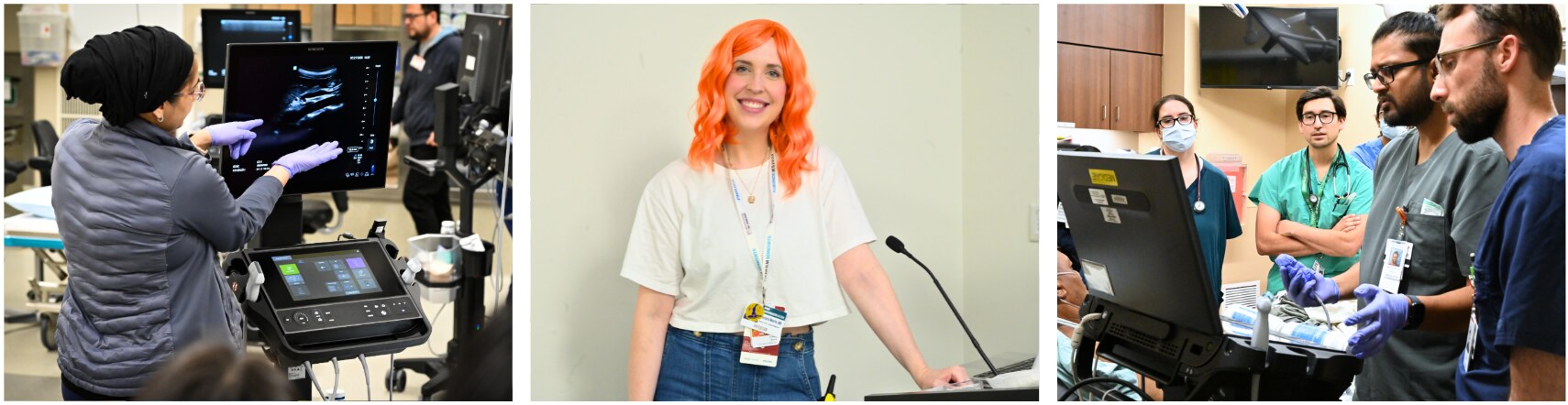
Ultrasound faculty play an integral role in medical student and resident education, serving as instructors, mentors, and curriculum leaders. Their work includes developing and delivering structured ultrasound training, overseeing quality assurance processes, and supporting learners as they build proficiency across core ultrasound applications. Faculty are also actively involved in faculty development, helping colleagues integrate ultrasound into their clinical practice and teaching.
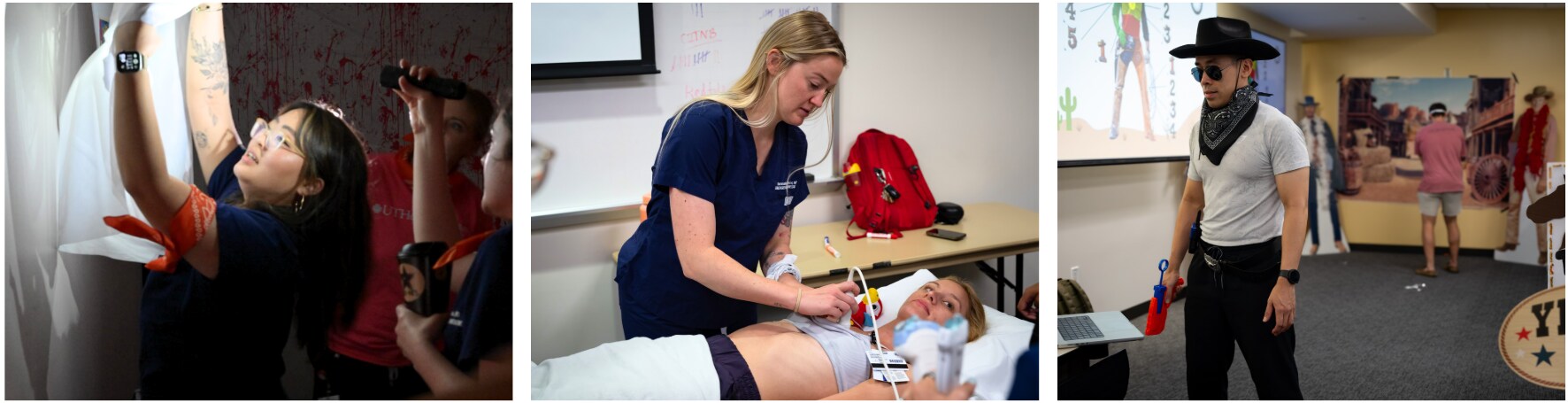
Beyond the department, ultrasound faculty hold leadership roles at the institutional, regional, and national levels. They regularly participate in educational conferences, workshops, and collaborative initiatives focused on advancing ultrasound education and best practices in emergency medicine. Through these efforts, UTHealth Houston Emergency Medicine continues to contribute meaningfully to the growth and evolution of point-of-care ultrasound as a standard of care.
Global Ultrasound Education & Outreach
Our Ultrasound section is actively engaged in advancing global health through ultrasound education, training, and collaboration. Our faculty and trainees are committed to strengthening point-of-care ultrasound (POCUS) capacity both locally and internationally by partnering with institutions, educators, and learners across diverse clinical settings.
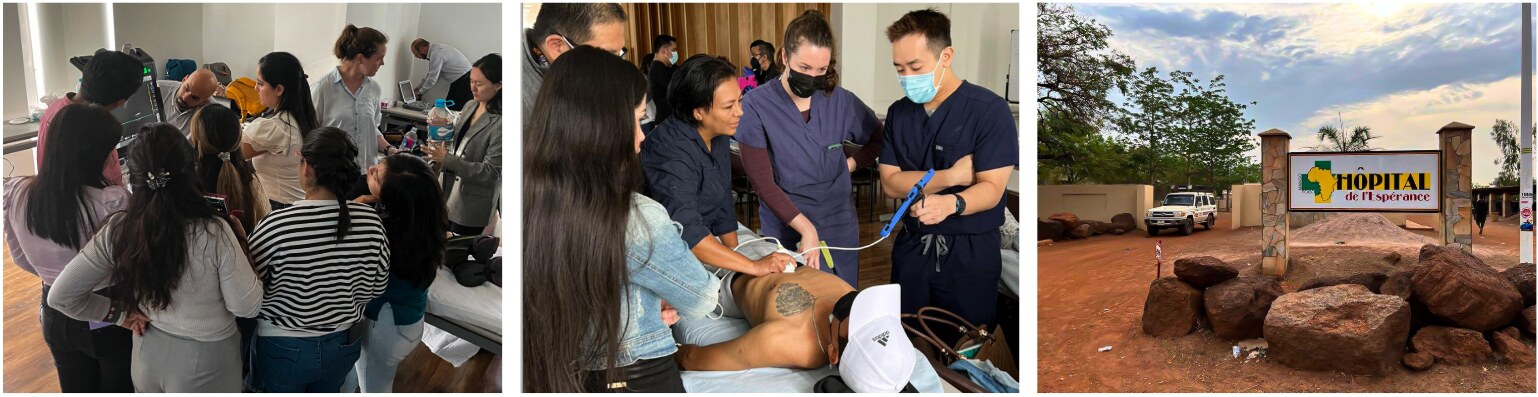
Through ongoing global initiatives, our faculty have led hands-on ultrasound education programs in Ecuador and Ghana, working directly with physicians and trainees in a range of clinical settings. In Quito, Ecuador, these efforts have focused on practical, bedside ultrasound instruction that supports day-to-day emergency care. In Ghana, similar work has emphasized sustainable training models and collaboration with local clinicians to strengthen long-term ultrasound capacity.
Beyond on-site teaching, our ultrasound faculty are involved in broader conversations around global health and medical education. UTHealth Houston Emergency Medicine regularly contributes to national and international forums and symposiums, sharing experience and lessons learned from global ultrasound education and collaboration.
A video recap from our 2023 visit to Quito offers a closer look at the hands-on teaching, collaboration with local teams, and the role ultrasound plays in real-world patient care.
Together, these initiatives reflect our department’s commitment to global engagement, educational excellence, and the responsible expansion of ultrasound as a vital tool in emergency medicine worldwide.
Why Choose UTHealth Houston?
- Innovative Curriculum: Integrated, longitudinal ultrasound training across residency levels
- State-of-the-Art Facilities: Access to advanced ultrasound technology and training spaces
- Expert Faculty: Learn from leaders with diverse clinical and research expertise
- Global Outreach: Opportunities for international teaching and research
- Collaborative Environment: Work alongside multidisciplinary teams in a dynamic, teaching-focused setting
Interested in Joining Us?
For more information about the program or fellowship opportunities, please contact:
Richard Gordon, MD
Fellowship Director
Department of Emergency Medicine, UTHealth Houston
Email: [email protected]
Phone: (713) 500-7848