Cardiology Fellowship Research Updates
Announcements, Awards & Accolades:
Fellow Research Project Highlights
Faculty Research Project Ideas
| Faculty Name | Contact Email | Project Description |
|---|---|---|
| Melvin Klegerman | [email protected] | Contact faculty for more information |
| Sachin Kumar | [email protected] | Predictors of survival in patients with AMI complicating Cardiogenic Shock. |
| Sadia Ashraf | [email protected] | Effect of Nr4a2 induction on stress induced arrhythmias in mice. |
| Siddharth Prakash | [email protected] | Analyzing the relationship between central aortic hemodynamics and aortic disease progression using waveform analysis. Using AI to detect BAV and ascending aortic dilation in unselected echocardiograms. Phenotypes of individuals with rare genetic variants in BAV and HTAD genes. |
| Syed Wamique Yusuf | [email protected] | Contact faculty for more information |
| Danai Kitkungvan | [email protected] | Contact faculty for more information |
| Richard Smalling | [email protected] | Potential for myocardial salvage with an Endothelin antagonist prior reperfusion in an ischemic/reperfusion model. Development of an echo/X-ray fusion imaging system. |
| Romain Harmancey | [email protected] | Cardiac Olfactory Receptor Signaling in the Pathophysiology of Heart Failure: A mechanistic study in cells and mice. |
| Simbo Chiadika | [email protected] | Echocardiographic findings in Sickle cell disease. Atrial fibrillation QI. |
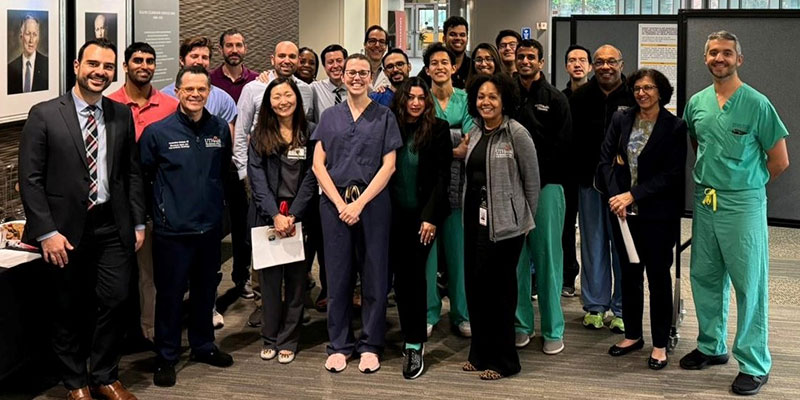
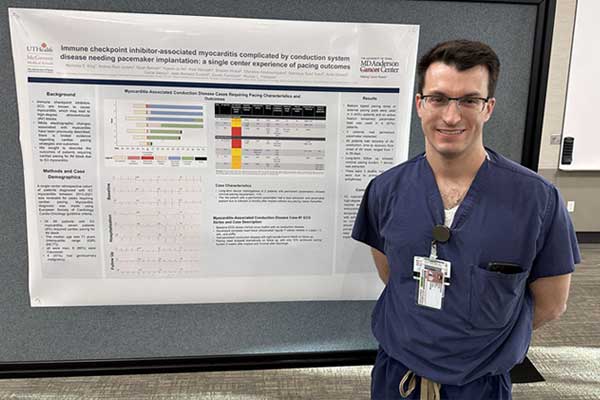
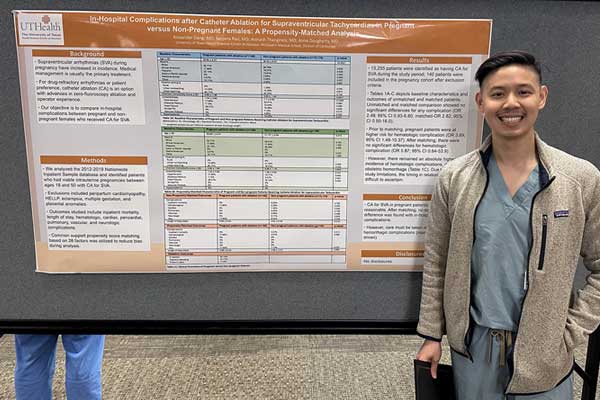
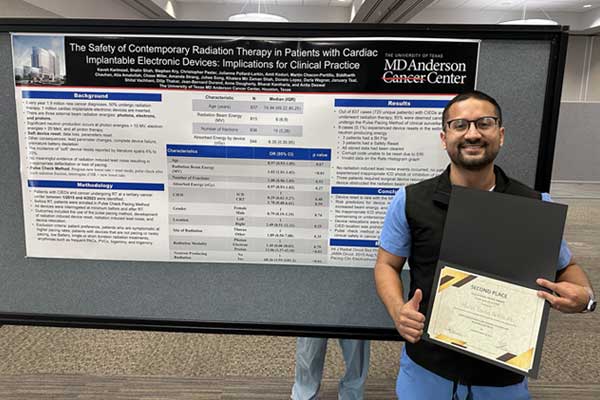
Our second annual Research Retreat took place in May 2025. Congratulations to this year’s winners!
- Immune Checkpoint Inhibitor-Associated Myocarditis Complicated by Conduction System Disease Needing Pacemaker Implantation: A Single Center Experience of Pacing Outcomes, by Dr. Nicholas King, Mentor Dr. Nicolas Palaskas (external link)
- In-Hospital Complications after Catheter Ablation for Supraventricular Tachycardia in Pregnant vs. Non-Pregnant Females: A Propensity-Matched Analysis, by Dr. Alexander Dang, Mentor Dr. Anne Dougherty
- The Safety of Contemporary Radiation Therapy in Patients with Cardiac Implantable Electronic Devices: Implications for Clinical Practice, by Dr. Martin Chacon-Portillo, Mentor Dr. Anita Deswal (external link)
Announcing the 2024-2025 Fellowship Research Committee:
- Siddharth Prakash (Director)
- Efstratios Koutroumpakis (Director)
- Deepa Raghunathan
- Romain Harmancey
- Danai Kitkungvan
- Olasimbo Chiadika
- Anju Bhardwaj
- Sachin Kumar
- Sukdeep Basra (New Member)
- Soumya Patnaik (New Member)
- Heinrich Taegtmeyer (New Member)
- Wamique Yusuf (New Member)
- Poyee (Pansy) Tung, MD (New Member)
Thank you for your service!
Spotlight On…
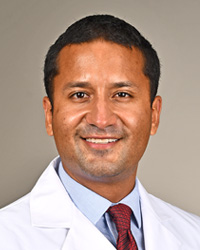
Where Are You From? Chihuahua, Chihuahua, Mexico
How did you get into Cardiology? I became fascinated with cardiology the day I read my first ECG in medical school. It was astonishing to see how a few lines and curves, when interpreted correctly, could help diagnose and triage patients with a wide range of pathologies. What continues to draw me to cardiology is the ability to evaluate the heart from all angles—its pumping, valvular, electrical, and vascular components—using advanced imaging technologies and minimally invasive interventions to provide truly comprehensive care. This holistic approach, where I can guide patients from their initial symptoms to definitive treatment, is incredibly fulfilling to me.
Tell us about your current research and what you love about it. My current research delves into the safety of performing radiation therapy on patients with cardiac implantable electric devices with personalized strategies, seeking to refine the detection of radiation-induced device complications and limit unnecessary testing and procedures. What excites me most is how our current research is attempting to redefine how cardiac implantable electric devices are configured to limit the number of interrogation sessions we perform and hopefully avoid delaying life-saving treatments such as radiation therapy in patients with cancer.
Research Newsletter:
Research Spotlight: Amier Haidar, MD
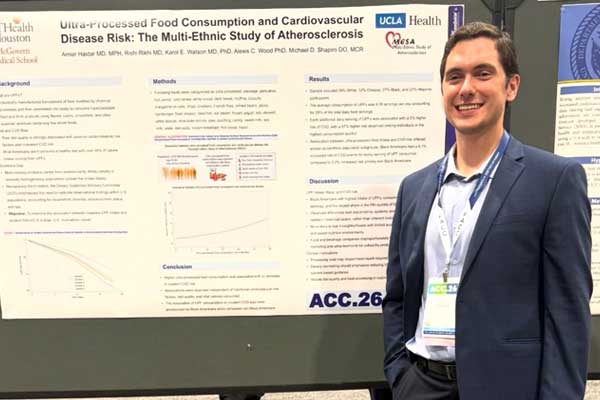
Ultra-processed food consumption and cardiovascular disease risk: the Multi-Ethnic Study of Atherosclerosis
Mentor: Dr. Fuentes
In a large, multi-ethnic cohort of U.S. adults, Dr Haider and his colleagues found that higher intake of ultra-processed foods was associated with a significantly increased risk of cardiovascular disease. Each additional daily serving was linked to about a 5% higher risk, and individuals with the highest intake had a 67% greater risk compared to those with the lowest. These findings remained significant after adjusting for diet quality, total calories consumed, and cardiometabolic risk factors. The association of UPF consumption on incident CVD was more pronounced for Black Americans when compared non-Black Americans, underscoring potential implications for health disparities and suggesting certain populations may be disproportionately exposed to UPFs, reflecting targeted marketing, inequitable food environments, and longstanding structural disparities.
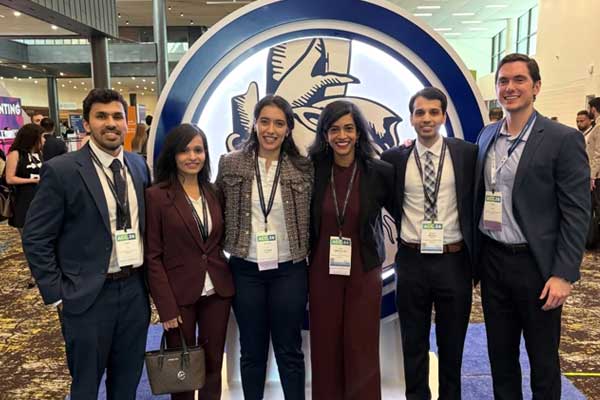
This was presented at ACC.26.
Research Resources:
How to Begin Research Projects at UTH: Practical Tips and Resources
By: Siddharth Prakash, MD, PhD
Adult Cardiovascular Genomics Certificate Course (external link): free CV genetics training with CME credit
Access to large healthcare datasets (external link) (Medicare, Medicaid, etc)
Access to UT Physicians clinical data or MHH PACS data (external link)
Access to free clinical research training
Guidelines for Manuscripts: Reporting Standards
- CONSORT Guidelines (for reporting clinical trials)
- PRISMA Guidelines (for reporting systematic reviews)
- STROBE Guidelines (for reporting observational studies)